Neck Pain and Cervical Radiculopathy: Causes, Treatment and When to Seek Help
If you have ever woken up unable to turn your head, or felt pain, tingling or numbness spreading from your neck into your shoulder and arm, you are far from alone. Neck pain is one of the most common musculoskeletal problems we see, and it can affect sleep, work, driving and the simple pleasure of looking around freely. The good news is that most episodes of neck pain, and most cases of cervical radiculopathy (a "trapped nerve" in the neck), improve with time and the right kind of care. Book an Appointment
About Neck Pain
Because it is so common, neck pain attracts plenty of myths. Many people believe that a painful neck means something is "out of alignment," "crumbling" or "trapped," or that the safest response is to keep the neck completely still. In reality, the neck is a strong, well-supported structure, and in the majority of cases pain does not signal serious damage.
How Common Is Neck Pain?
Neck pain is one of the leading causes of disability worldwide. Global estimates suggest that well over two hundred million people are living with neck pain at any one time, and that it becomes more common through middle age (Safiri et al., 2020). Many people experience at least one troublesome episode during their lives, and for some it comes and goes over many years (Cohen, 2015). It affects people in every type of work, from long hours at a computer to physically demanding jobs.Because it is so common, neck pain attracts plenty of myths. Many people believe that a painful neck means something is "out of alignment," "crumbling" or "trapped," or that the safest response is to keep the neck completely still. In reality, the neck is a strong, well-supported structure, and in the majority of cases pain does not signal serious damage.

Our Expertise
Our Expertise in Neck Pain
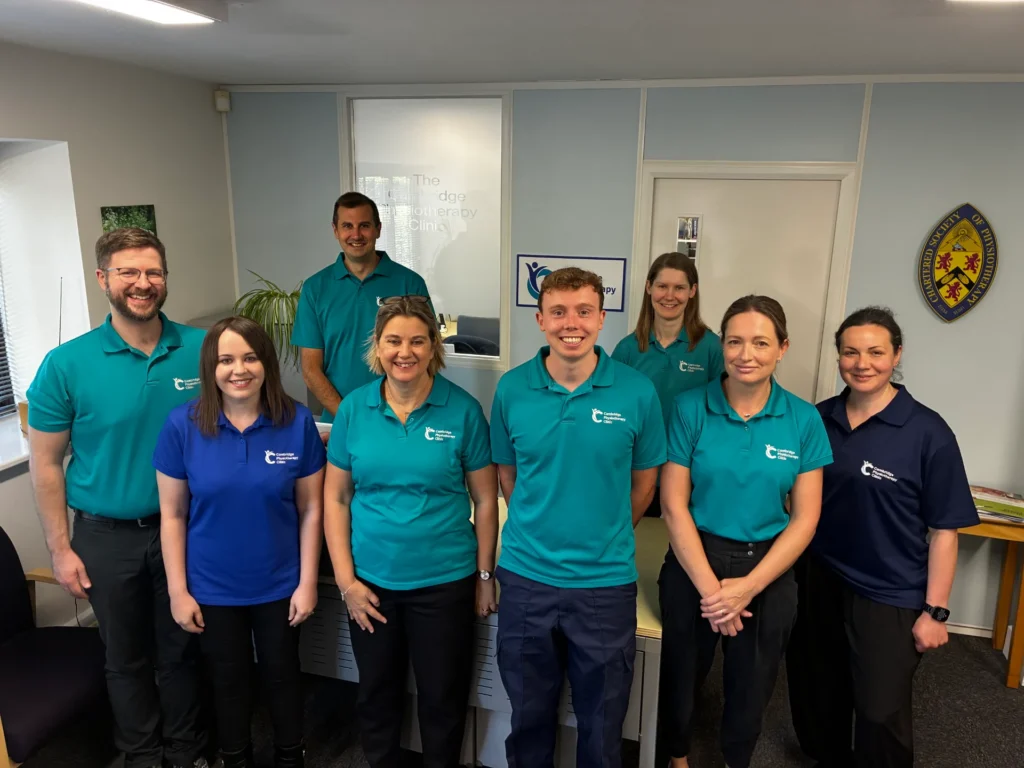
Cambridge Physiotherapy Clinic has supported patients since 1986. Our team treats spinal conditions ranging from everyday neck pain to more complex problems involving arm symptoms and persistent pain.
Our Clinical Specialist and Clinic Director, Lucy Cameron, has particular expertise in spinal conditions. Lucy qualified in 1995, holds an MSc in Advanced Practice and Research, and is a member of the Musculoskeletal Association of Chartered Physiotherapists.
She spent 15 years at Addenbrooke’s Hospital as an Advanced Practitioner and Consultant Physiotherapist, working alongside spinal neurosurgeons, rheumatologists and pain consultants. This experience informs her assessment of spinal problems, discussions about treatment options and recognition of symptoms requiring further investigation.
Through our training and mentoring programme with Lucy, all the team are experienced and confident in treating neck problems. Find out more about our Back Pain Clinic.
Causes
Common contributors include:
What Causes Neck Pain?
In most people, neck pain arises from a combination of factors involving muscles, joints, ligaments, discs and the nervous system, rather than from one damaged part.Common contributors include:

Muscle Strain and Tension
Sleeping in an awkward position, sudden movements, or long periods holding the head in one position can irritate the muscles of the neck and upper shoulders.Joint Irritation
The small facet joints at the back of the neck can become stiff or sensitive, often causing pain on one side and difficulty turning or tilting the head.Disc Problems
The discs between the vertebrae act as shock absorbers. Over time, or after a strain, a disc can bulge or its inner material can press on nearby structures, including nerve roots.Age-Related Changes
Scans of adults commonly show disc wear, joint changes and small bony spurs, sometimes called cervical spondylosis. These findings are very common in people with no neck pain at all, so they do not always explain symptoms.Injury
A sudden jolt, such as in a car accident or a fall, can cause whiplash-associated pain and stiffness. Most people recover well, although some take longer.Sustained Postures and Workload
Long spells at a screen, looking down at a phone or holding the arms up for work can contribute to neck and shoulder discomfort, particularly when we rarely change position.Lifestyle and General Health
Poor sleep, low activity levels and smoking are associated with a higher risk of ongoing neck pain.Stress, Worry and Low Mood
Pain and emotions are closely connected. When we are anxious or exhausted, the neck and shoulder muscles often tense, the nervous system becomes more sensitive, and pain can feel more intense and last longer.
The important message is that pain intensity does not always match the amount of tissue damage. A very painful, locked neck (often called acute wry neck) can happen in an otherwise healthy spine, and it usually settles within days to a couple of weeks.

Cervical Radiculopathy
In younger adults, the most common cause is a disc herniation, in which part of a disc presses on or inflames a nearby nerve root. In older adults, it is more often caused by narrowing of the openings the nerves pass through (foraminal stenosis), due to disc changes and bony spurs (Iyer and Kim, 2016). The nerve roots supplying the forearm and hand, known as C6 and C7, are the ones most often affected.
Cervical radiculopathy is much less common than general neck pain. It most often affects people in their forties and fifties, and it usually affects one arm rather than both (Radhakrishnan et al., 1994).
What Is Cervical Radiculopathy?
Cervical radiculopathy is the term for symptoms caused by irritation or compression of a nerve root in the neck. Eight pairs of nerve roots leave the cervical spine and travel through the shoulder and down the arm to supply the skin, muscles and reflexes of the arm and hand. When one of these roots is irritated, symptoms usually follow its path into the arm. You may hear it described as a "pinched" or "trapped" nerve in the neck, and it is sometimes thought of as the arm equivalent of sciatica.In younger adults, the most common cause is a disc herniation, in which part of a disc presses on or inflames a nearby nerve root. In older adults, it is more often caused by narrowing of the openings the nerves pass through (foraminal stenosis), due to disc changes and bony spurs (Iyer and Kim, 2016). The nerve roots supplying the forearm and hand, known as C6 and C7, are the ones most often affected.
Cervical radiculopathy is much less common than general neck pain. It most often affects people in their forties and fifties, and it usually affects one arm rather than both (Radhakrishnan et al., 1994).
Symptoms of Cervical Radiculopathy
Radiculopathy feels different from person to person. Typical features include:
Pain that spreads from the neck into the shoulder blade, shoulder, arm or hand
A burning, electric or sharp quality to the arm pain
Pins and needles or tingling in the arm, hand or particular fingers
Numbness in part of the arm or hand
Weakness in the arm or hand, such as difficulty gripping or lifting
Arm pain that is worse when tilting or turning the head towards the painful side, or looking up
Relief when resting the hand on top of the head
Many people with radiculopathy also have neck pain, although in some cases the arm pain is much stronger than the neck pain. The pattern of symptoms in the arm and hand can give your clinician useful clues about which nerve root is involved.
Urgent Help
Warning Signs: When to Seek Urgent Help
Most neck pain is not dangerous, but a small number of cases involve serious conditions that need prompt medical attention. Please seek emergency care if you experience neck pain together with any of the following: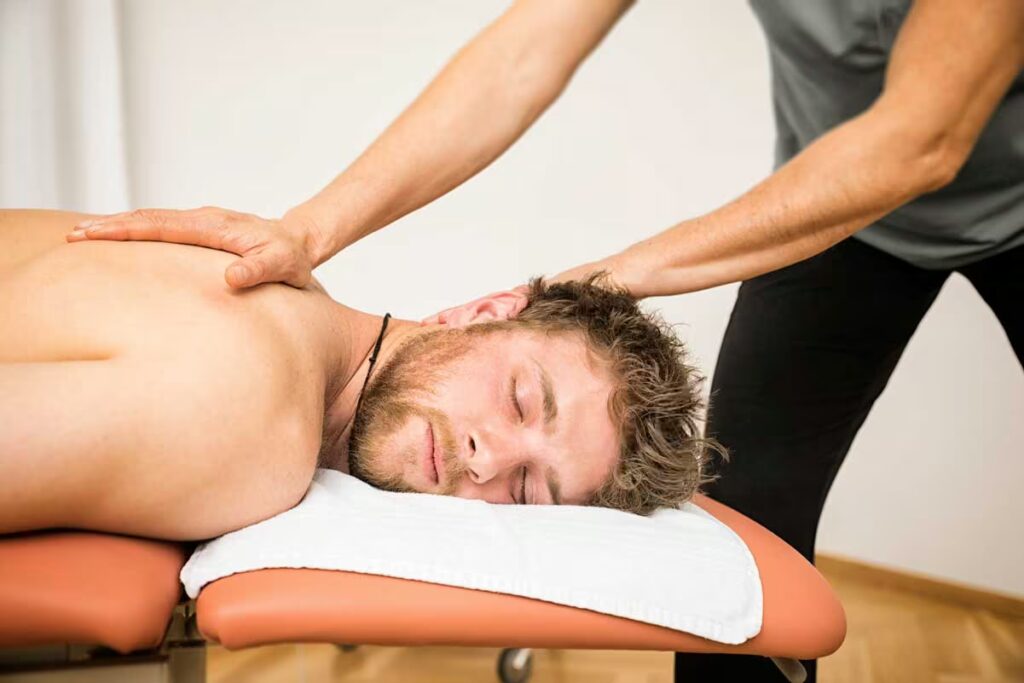
Sudden, severe neck pain or headache unlike anything you have had before, especially with dizziness, double vision, slurred speech, difficulty swallowing, facial numbness, loss of balance or fainting
Neck pain after a significant injury, such as a car accident, a fall from height or a diving accident
Fever with a stiff neck, headache, sensitivity to light or a rash
Pain in the neck, jaw or arm together with chest pain, breathlessness or sweating
Weakness or numbness in both arms, or in the arms and legs, or weakness that is rapidly getting worse
Assessment
How We Assess Neck Pain and Radiculopathy
An appointment with us begins with a conversation. We will ask when the pain started, whether there was an injury, what makes it better or worse, how it affects your sleep, work and daily life, and whether you have any of the warning signs described above. Your general health, stress levels and goals for recovery are all important, because they help us shape a plan that fits you.
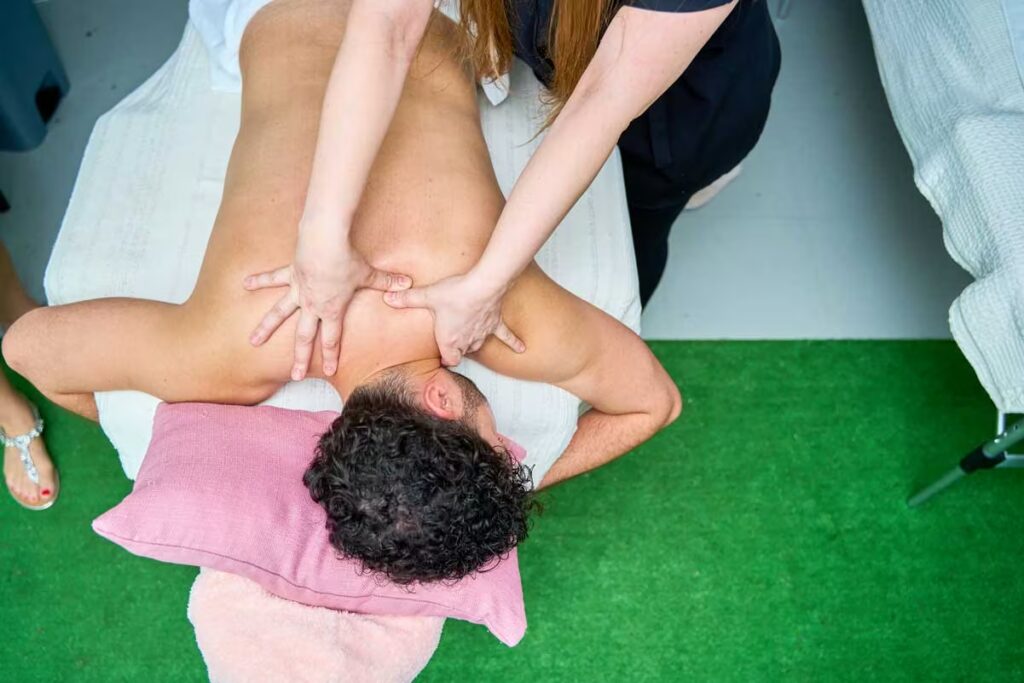
We then carry out a physical examination. This typically includes watching how you move your neck and shoulders, checking the mobility of your neck and upper back, testing the strength, sensation and reflexes in your arms (and, where needed, your legs), and performing specific tests that can help identify whether a nerve root is involved. No single test is perfect, so we look at the overall pattern of findings (Thoomes et al., 2018).
Most people do not need an X-ray, CT or MRI scan. Imaging is not recommended routinely for neck pain without warning signs, because scans often show age-related changes that are not the cause of pain and can lead to unnecessary worry or treatment (Blanpied et al., 2017). We will refer you for imaging or to a doctor if your symptoms, examination findings or lack of progress suggest it would change your care, for example if you have significant or worsening weakness, or signs of myelopathy.
Treatment
Treatment Options
The best treatment depends on the cause of your pain, how long you have had it and what matters most to you. Current guidelines favour starting with non-drug approaches and physiotherapy, and reserving more invasive options for people who do not improve (Blanpied et al., 2017; Cohen, 2015).
Education and Reassurance
Understanding your condition can make a real difference. Knowing that most neck pain and radiculopathy improve, that hurt does not necessarily mean harm, and that gentle movement is usually safe can reduce fear and help you return to normal activity sooner.
Acute Neck Pain
Keeping the neck still for long periods is not recommended. Soft collars are not routinely advised, as they can increase stiffness and slow recovery. For most people, gentle, regular movement of the neck and shoulders within a comfortable range, together with general activity such as walking, helps recovery. Heat and simple painkillers from your GP or pharmacist can also be helpful.
What Happens at Your First Appointment?
We start by understanding your symptoms and how they affect your life. We will ask about their onset, what aggravates or eases them, your medical history and any previous treatment.
We also want to understand your priorities. Perhaps you want to drive comfortably, work at your desk, sleep better or return to swimming.
Your examination may include neck and shoulder movement, strength and functional tasks. When arm symptoms are present, we may assess sensation, reflexes and muscle strength, alongside tests that help identify whether a nerve is involved.
We explain our findings in plain language and discuss the available options. Where further medical assessment is needed, we will explain why.
We also use the Short MSK-HQ questionnaire alongside your own goals to help review progress. Treatment decisions remain a shared discussion throughout your care.
Personalised Exercise and Rehabilitation
Exercise is an important part of rehabilitation for many neck problems. The starting point should reflect your symptoms, examination and confidence with movement.
Your programme may include comfortable movement exercises, followed by work on neck, shoulder and upper back strength or endurance. We can then progress towards the demands of your work, hobbies or sport.
Research supports certain strengthening programmes for persistent neck pain, particularly exercises involving the neck, shoulders and shoulder blade muscles. Evidence is less certain for some other presentations, including acute cervical radiculopathy, so treatment needs to be individualised and reviewed.
We explain how to practise each exercise and what response to expect. You will receive a printed handout of the exercises, or they can be emailed to you. Some patients may also prefer a video on the phones of how to do their exercises. We treat everyone as an individual.
The aim is a manageable programme that fits your life and helps you build towards meaningful goals.
Physiotherapy for Cervical Radiculopathy
When a nerve is sensitive, everyday tasks may need temporary adjustment. We can help you identify manageable ways to keep moving, support your arm comfortably and break demanding activities into smaller amounts.
Where appropriate, rehabilitation may include gentle movement and carefully selected nerve movement exercises. These are tailored to your response and should not be forced through worsening symptoms.
We monitor changes in strength, sensation and function as well as pain. Persistent or worsening weakness may change the recommended management and require referral.
If pain is preventing sleep or making rehabilitation difficult, we may suggest discussing medication with your GP or pharmacist.
Your plan should include clear advice about what to watch for between appointments, particularly any new neurological symptoms. We will review progress and discuss further assessment if recovery is not following the expected course.
Hands-On Treatment and Massage
Hands-on treatment may form part of your physiotherapy where it is suitable. This can include gentle joint mobilisation and soft tissue techniques. The aim is to reduce your pain and improve your movement so that exercises and rehabilitation can help your progress.
Before treatment, we explain the proposed approach, discuss relevant risks and alternatives, and check your consent. Your symptoms and preferences help guide what we choose.
Our sports and remedial massage service is also available. Your physiotherapist can help you decide whether massage would be a useful addition to your rehabilitation, with agreed goals and a review of its benefit.
Acupuncture and Dry Needling
We offer acupuncture and dry needling as additional options within our clinic. If these are being considered, your physiotherapist will discuss their suitability, the evidence, possible benefits and risks, and alternative approaches.
The aim with acupuncture is to reduce your pain, to allow you to progress your exercises and to get you back to do the things you love to do.
They are optional treatments and are used alongside a broader rehabilitation plan. We review whether they are helping you achieve your goals.
Physio-Led Pilates and Returning to Activity
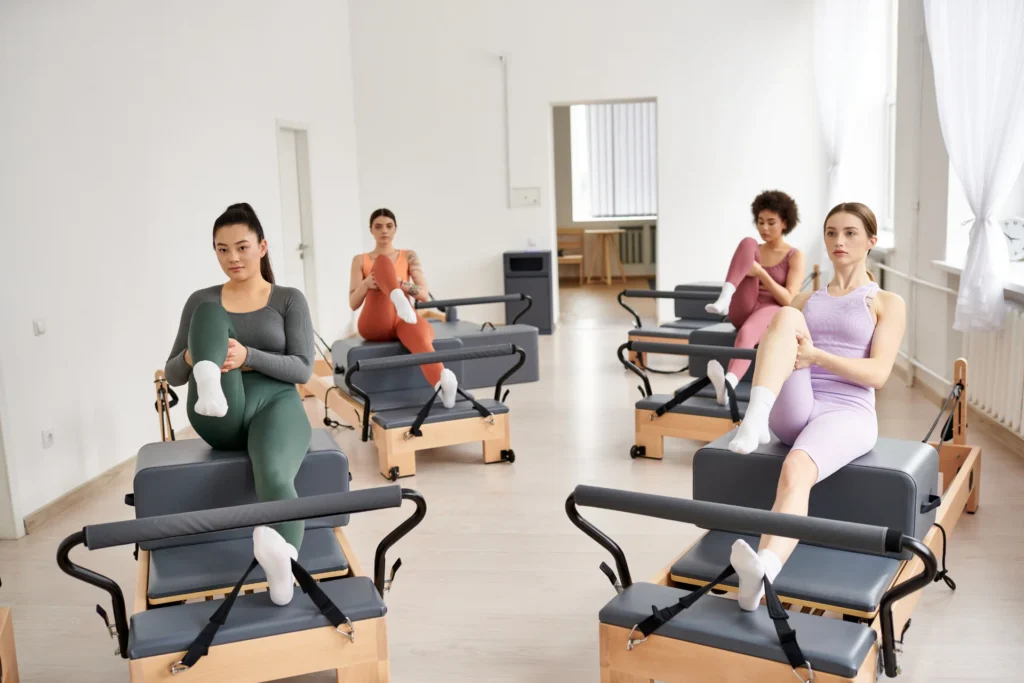
For some people, our Physio-led Pilates service provides a supported way to develop strength, movement control and confidence.
An individual assessment helps establish whether classes are appropriate and whether exercises need adapting. Our classes take place at Stapleford Pavilion and are led by a physiotherapist with additional Pilates training.
We can discuss how Pilates fits with your treatment and the other activities you enjoy. Someone with an irritable nerve problem may initially benefit from individual rehabilitation before considering a class.
Your longer-term plan might instead centre on gym exercise, swimming, walking or returning to a particular sport. We will help you choose a practical route that suits your interests.
Work and Everyday Habits
If work aggravates your symptoms, we can explore the demands involved. This may include workstation setup, screen position, repetitive tasks, lifting or long periods of driving.
We aim to identify useful adjustments that you can realistically maintain.
Varying tasks and avoiding long periods in one position may help. You may also benefit from shorter activity periods while symptoms are more sensitive, followed by a gradual increase.
You do not always need to be completely symptom-free before returning to work. The timing and any temporary changes should reflect your symptoms and the demands of your role.
Injections and Surgery
If severe arm pain does not improve after several weeks of well-delivered conservative care, we may discuss a steroid injection near the affected nerve root or referral to a spinal specialist. Only a small proportion of people with cervical radiculopathy need surgery, and many improve without it.
Recovery
How Long Does Recovery Take?
Most episodes of acute neck pain improve significantly within a few days to a few weeks, although some stiffness or mild discomfort can linger. Cervical radiculopathy often takes longer. The outlook is generally favourable, and most people notice steady improvement over several weeks to a few months with conservative care (Iyer and Kim, 2016). Numbness and tingling can take longer to settle than pain. Progress is rarely a straight line, and temporary setbacks are normal. If your symptoms are not improving, are getting worse, or if you notice new weakness or numbness, please let us know so we can review your plan.Persistent Pain
Pain that lasts longer than three months is considered persistent. This does not mean it cannot improve. A combination of graded exercise, understanding pain, good sleep, stress management and support from your care team can help people regain function and confidence, even when some pain remains.Can Neck Pain and Radiculopathy Be Prevented?
There is no guaranteed way to prevent neck pain, but you can lower the chances of it coming back. The most consistent evidence supports regular exercise, particularly programmes that strengthen the neck, shoulders and upper back, alongside staying generally active (Blanpied et al., 2017). There is little evidence that any particular pillow, posture corrector or collar prevents neck pain. A good workstation setup can improve comfort, but the best single piece of advice is to vary your posture, take regular breaks and keep your body moving.
Book an Appointment
When Should You Book an Appointment?
You do not need to wait for your pain to become severe before seeking help. Consider booking an appointment with Cambridge Physiotherapy Clinic if:
Your neck pain has lasted more than a couple of weeks without improving
You have pain travelling into your shoulder, arm or hand, or pins and needles or numbness
Pain is interfering with your sleep, work, driving or daily activities
You have had repeated episodes of neck pain and want to reduce the chances of it returning
You are unsure whether your symptoms are serious and would like reassurance and a clear plan
Our team will carry out a thorough assessment, explain what we find in plain language, and work with you to build a treatment plan based on current evidence and your own goals.
Book an Appointment

FAQs
Frequently Asked Questions
Is Physiotherapy Painful?
No rarely. We try and make our assessment and treatment as painless as possible. If you are sore after treatment we recommend simple painkillers and would expect it to be much easier the next day.
How Many Sessions Will I Need?
After your assessment your physiotherapist will be able to give you an idea of how many sessions you may need. On average at Cambridge Physiotherapy Clinic we see patients 4-6 times, but some people need more and others less.
Can Physiotherapy Help with Cervical Radiculopathy?
Physiotherapy can help many people manage their symptoms and return to everyday activities. Your treatment may include exercises, advice on comfortable positions and adapting activities, and hands-on treatment where appropriate. We monitor your strength, sensation and progress, and explain when further medical assessment may be needed.
Should I Keep Exercising with Neck Pain or Arm Symptoms?
Gentle movement and staying active are usually helpful, although you may need to temporarily adapt activities that aggravate your symptoms. Your physiotherapist can help you find suitable exercises and gradually build your tolerance. Exercises should be reviewed if they cause a lasting increase in arm pain, tingling or numbness. New or worsening weakness needs prompt medical assessment.
Do I Need an MRI Scan for Neck Pain or Cervical Radiculopathy?
Not everyone needs a scan. A clinical assessment can often provide enough information to start treatment. An MRI may be appropriate if symptoms persist, there is significant or worsening weakness, or the findings could change your care. We can discuss whether further investigation is needed and liaise with your GP or consultant about the appropriate referral pathway.
When Should I Seek Urgent Medical Help for Neck Pain?
Seek urgent medical assessment if you develop new or worsening arm or hand weakness, clumsy hands, difficulty walking or changes in balance. New bladder or bowel changes alongside these symptoms also need urgent assessment. These symptoms can sometimes indicate pressure on the spinal cord, so do not wait for a routine physiotherapy appointment.