Shockwave
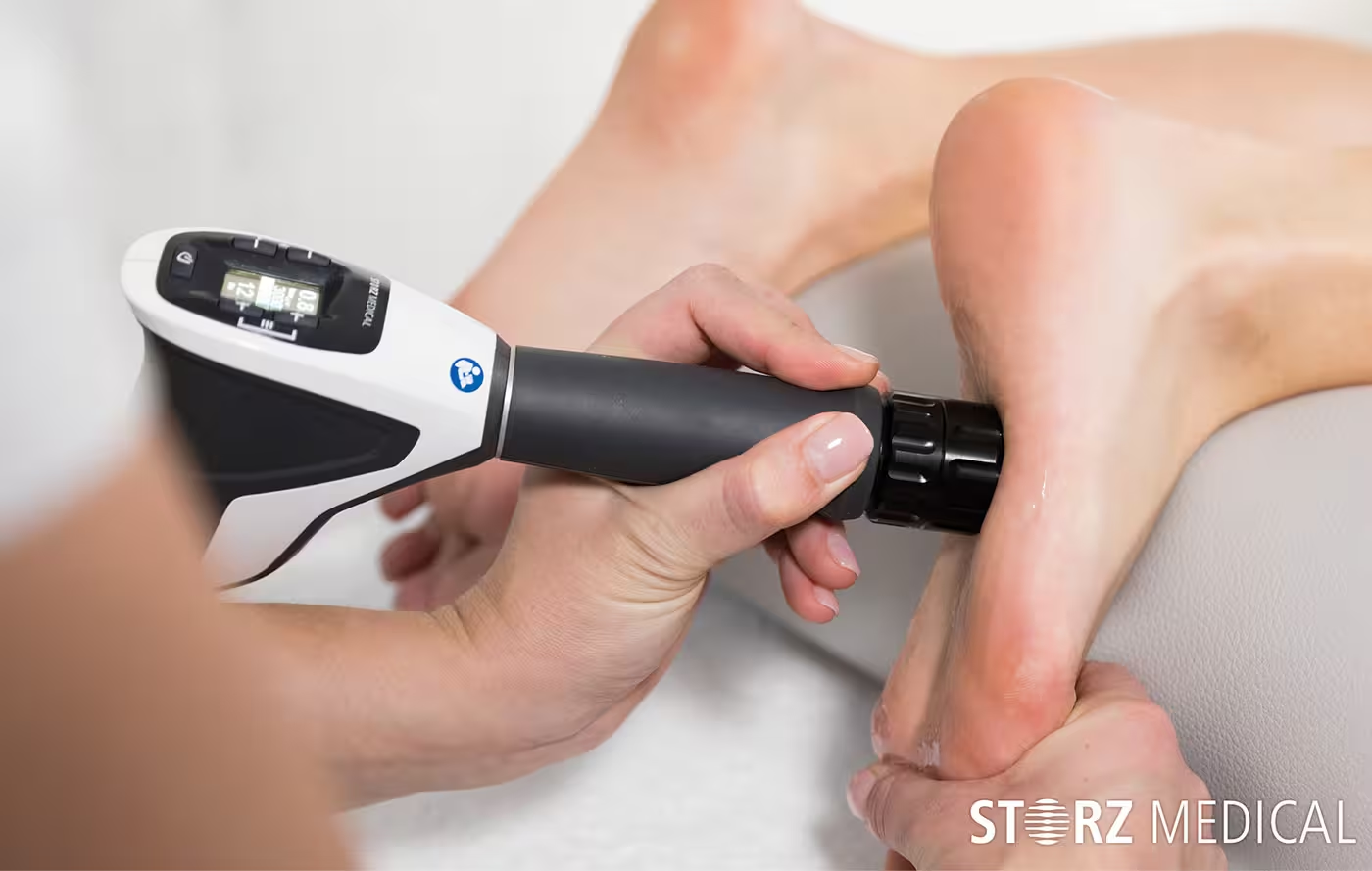
Radial Shockwave Therapy is an effective, evidence-based treatment used to stimulate healing in stubborn musculoskeletal conditions that haven’t fully settled with rest, exercise or manual therapy alone.
Shockwave works by delivering short sound waves into injured tissue. These waves stimulate blood flow, encourage tissue regeneration, reduce pain sensitivity and help “kick-start” the body’s natural healing processes. In simple terms, it helps tissues that have become stuck in a slow-healing phase to move forward again.
We commonly use radial shockwave to treat conditions such as:
- Achilles and patellar tendinopathy
- Plantar heel pain (plantar fasciopathy)
- Tennis and golfer’s elbow
- Shoulder tendinopathy and calcific shoulder pain
- Gluteal and hip tendon pain
Shockwave is particularly helpful for long-standing tendon and soft-tissue problems, where pain has been present for 3 months or more.
Treatment sessions are quick and are delivered by one of our experienced physiotherapists as part of a wider treatment plan. Shockwave is rarely used in isolation – it works best alongside the right loading exercises, advice and hands-on physiotherapy where needed.
Most people describe the sensation as uncomfortable rather than painful, and it is very well tolerated. At Cambridge Physiotherapy Clinic we have the V-ACTOR head that we can use for beforehand to help de-sensitise the area and make shockwave even more comfortable. There is no downtime afterwards, and you can usually continue with normal daily activities straight away.
At Cambridge Physiotherapy Clinic, we only recommend shockwave when it is clinically appropriate for you. We’ll assess your condition thoroughly, explain whether it’s the right option, and make sure it fits into a clear, personalised recovery plan.
If you’ve been struggling with persistent pain and feel like you’ve “tried everything”, shockwave may be a helpful next step. Get in touch to book an assessment and find out if it’s right for you.
FAQs
Radial Shockwave Therapy – FAQs
Is shockwave therapy painful?
Shockwave can feel uncomfortable, particularly over sensitive areas, but it should always be tolerable. The intensity is adjusted to suit you, and most patients find it becomes easier as treatment progresses. At Cambridge Physiotherapy we have a V-ACTOR head which we can use beforehand to make the shockwave even more comfortable. We’ll talk you through what to expect and stop at any point if needed.
Can I take pain medications after the treatment session to help with the discomfort?
You are fine to take Paracetamol but will be advised not to take anti-inflammatories (i.e. Ibuprofen or Naproxen) or apply ice directly over the treatment area after a session. Shockwave works by inducing an inflammatory response to “kick start” the natural healing process, so taking anti-inflammatory medication will counteract that process.
How many sessions will I need?
Most people require a short course of treatment, typically 4–6 sessions, depending on the condition and how long symptoms have been present. Your physiotherapist will discuss this with you after your assessment and review progress regularly.
We have packages of 4 sessions and if you need more you can purchase top-up sessions.
How often will I need shockwave?
Shockwave sessions are most effective if they are performed 7-10 days apart. It is best to start shockwave when you know you’ll be around in Cambridge for the next 4-6 weeks.
When will I notice an improvement?
Some people notice improvement within a few weeks, while for others it’s more gradual. Shockwave stimulates a healing response rather than providing instant relief, so benefits often build over time, particularly when combined with the right exercises.
Is shockwave therapy safe?
Yes. Radial shockwave is a well-established and safe treatment when delivered by trained clinicians. It is not suitable for everyone, and we’ll screen carefully to make sure it’s appropriate for you before starting treatment.
Can shockwave replace exercises or physiotherapy?
No – and that’s important. Shockwave works best as part of a broader physiotherapy programme. Exercises, advice and activity modification are essential to achieve lasting results and reduce the risk of symptoms returning.
Does AXA/PPP insurance cover shockwave?
Yes. You will need to talk to AXA/PPP to get an authorisation code and we can then book an assessment and your shockwave appointments.
Is there anyone who can’t have shockwave?
It is not recommended for anyone who is pregnant, has an infection or open wound in the area, tumour near the area or recent fractures.
The physiotherapist will take a detailed assessment of your condition and will only recommend shockwave if it is felt to be safe for you.
REVIEWS
Hear What Our Patients Are Saying
Posted onTrustindex verifies that the original source of the review is Google. Good, clear advice. Relaxed consultation and logical and appropriate exercise regime to follow.Posted onTrustindex verifies that the original source of the review is Google. Lucy explained and showed me on an artificial spine what my problem is. She has given me specific exercises to do daily and I will see her again. A very positive experience.Posted onTrustindex verifies that the original source of the review is Google. Excellent initial meeting. Very thorough, very good at explaining in an easy to understand way. Would definitely recommendPosted onTrustindex verifies that the original source of the review is Google. Emma is friendly, kind, knowledgeable and professional. My Achilles has recovered remarkably quickly with her help.Posted onTrustindex verifies that the original source of the review is Google. I felt very comfortable with Kyle, he was professional and informative about my condition. I have been given several exercises to do during the next week. Very good experience overall.Posted onTrustindex verifies that the original source of the review is Google. They are profesional and staff is very educated. Everything happened in time with great advice. I am very lucky to work with this organisation. All the best TonkoPosted onTrustindex verifies that the original source of the review is Google. Today I had an initial consultation with Emma about a shoulder issue I’m having and she was brilliant. She was incredibly thorough with her screening and questioning to pinpoint the most probable causes and treatments. Shoulders are always tricky so I was very happy to hear that she wasn’t too concerned about my dilemma. She assured me with good rest and recovery procedures, I should be back up to speed within the next fortnight or so. Thanks so much Emma!